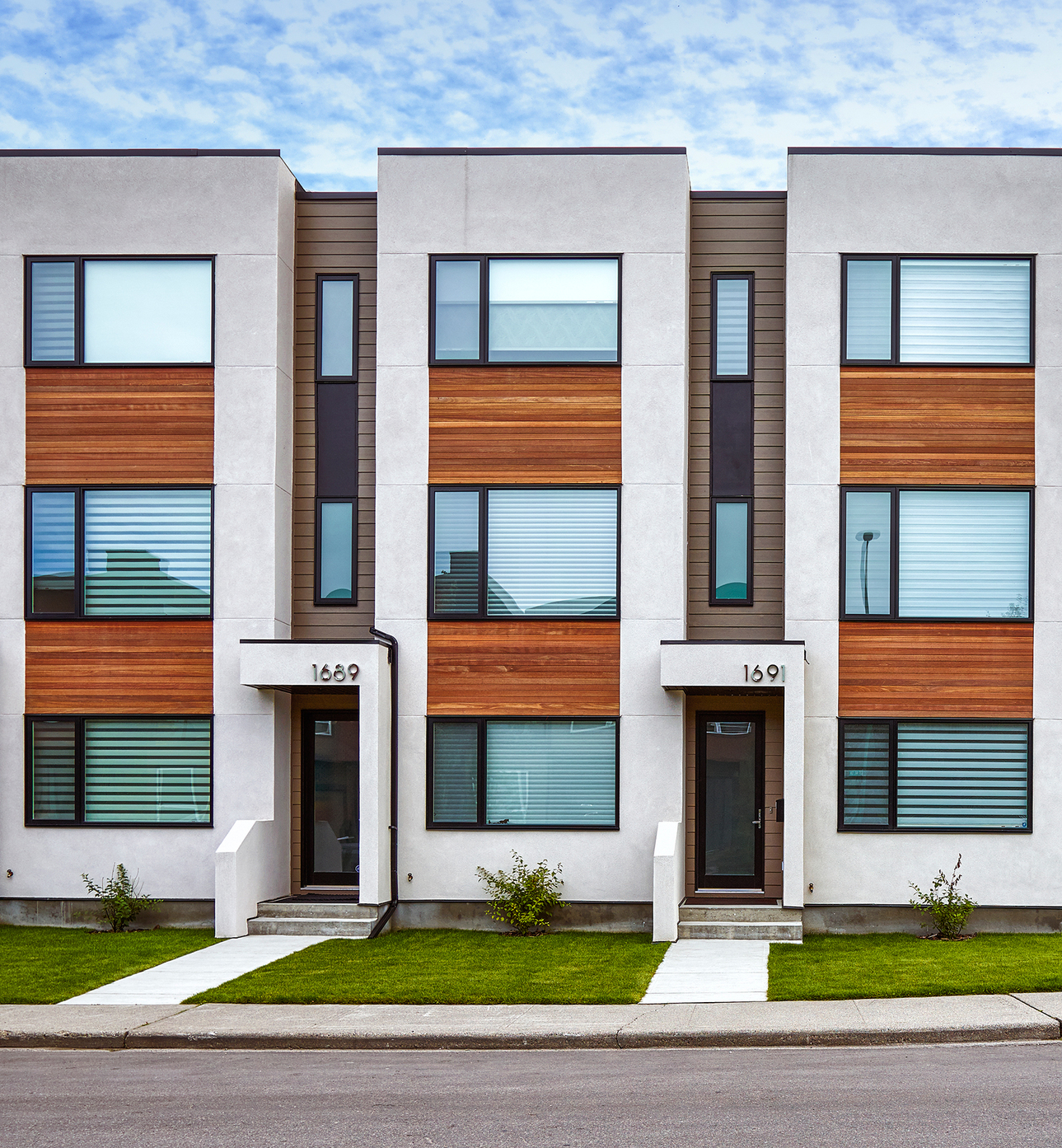

A follow-up to The New Middle Housing Landscape in Calgary
When we last wrote about the state of middle housing regulation in April, the ink on the repeal bylaw was barely dry. Calgary’s City Council had just voted 12–3 to wind back the clock on two years of middle housing momentum, and the industry was absorbing what that meant. Two months later, the situation has only grown more uncertain.
As of this week, it's now clear that the "repeal and replace" promise that defined Mayor Farkas's election campaign is, so far, only partially-fulfilled. Council voted down a motion to move forward with Local Area Plans as a replacement framework, leaving no approved path towards the density that both the federal government and the housing market are demanding.
The Policy Picture Today
The repeal takes legal effect on August 4, 2026—less than ten weeks away. After that date, the amended R‑CG bylaw and the restored low-density designations become the law of the land. Over 306,000 parcels will revert to their pre-2024 designations (primarily R‑C1 and R‑C2), meaning row housing isn't even a discretionary option on the majority of inner-city lots you might have been evaluating a year ago.
The key changes that directly affect what you can build in R‑CG going forward are:
Height limits lowered from 11.0 metres to 10.0 metres,
Lot coverage drops from 60% to 55%,
Removal of zero lot line configurations, and
Rowhouses that are fully compliant with the Bylaw will again be a permitted use (no option for appeals).
What is still being considered is:
Decreasing density from from four to three dwelling units on a standard 50’ parcel.
Prohibiting mid-block rowhouses and townhouses. This would mean that only parcels at the end of a block—essentially corner lots and the first three lots adjacent to a corner—could accommodate rowhousing going forward.
Reintroducing contextual front setbacks,
Restricting the number of buildings on a property.
These items have been put to administration to model and test, with their recommendation on the density reduction being presented to Council on July 21, 2026.
What hasn't been resolved is what comes next. A replacement densification framework—whether through the new Zoning Bylaw, expanded Local Area Plans, or some other mechanism—could take years to materialize. Councillors who supported the repeal have not coalesced around an alternative, and as of this week, council has actively voted down one of the most concrete replacement proposals on the table.
Current Applications
The most time-sensitive opportunity for developers with current applications is the grandfathering provision. Projects are protected from the new rules if they meet one of the following conditions:
A complete development permit, building permit, or subdivision application was submitted before April 8, 2026 (the bylaw's first reading date); or
A complete application has been approved before August 4, 2026.
So, meeting this window is possible for current applications, but newer applications will be subject to the reverted land use. Therefore, many developers looking to achieve the density formerly possible under R‑CG will have to rezone their property back to R‑CG—and follow whatever Council decides its rules will be—or to another district like H-GO or M-CG.
Repositioning For the New R‑CG
For projects that won't make the August 4 window, you’re going to have to choose from the space selection of parcels that had already been rezoned to R‑CG before blanket rezoning, or have to consider doing your own land use amendment. Some parcels may also require a policy amendment. If Council doesn’t overburden the R‑CG district beyond viability, if you choose to rezone to R‑CG, the amended rules will be the ones you’ll be working within for the foreseeable future. The economics may be harder, but your completion will be reduced. Scarcity may even increase your sale prices.
Prioritize corner lots and end-of-block parcels. This is the most significant site-selection shift in the new environment. Corner lots were always attractive for R‑CG rowhouses, but they may now the only sites where row-housing will be an option. Expect land values on qualifying corner parcels to reflect this scarcity premium, and adjust your acquisition costs accordingly. Patience in site selection will separate profitable projects from marginal ones.
Rethink your unit mix math. The drop from four to three upper units per parcel would have a meaningful pro forma impact. On a lot that previously supported a four-unit rowhouse with secondary suites—yielding up to eight total dwellings—you may now be looking at three-units with secondary suites, or a two-plus-two configuration if the site qualifies. Model your return thresholds against the new maximum density before tying up land.
Revisit semi-detached dwellings. The amended R‑CG bylaw still lists contextual single-detached and semi-detached homes as permitted uses. For mid-block sites that may no longer eligible for rowhouses, well-designed semi-detached homes with secondary suites can still deliver meaningful density and a workable return, especially in high-demand inner-city neighbourhoods where lot values are driven by location rather than density alone.
Design to the setback and height envelope precisely. With tighter coverage at 55% and a 10-metre height limit, millimetres matter more than they used to. Engage your designer early to maximize the buildable envelope without triggering relaxations—discretionary projects that require relaxations face a more uncertain approval process than they did two years ago, and you can't afford the carrying cost of protracted hearings.
Rebuilding the Case for Middle Housing: The Industry's Role
This is where the conversation has to go beyond permits and project economics. The repeal happened because a critical mass of Calgarians—and by extension, their elected councillors—came to believe that the blanket rezoning approach was being imposed on them rather than built with them. That perception is something the development industry helped create, and it's something the development industry can help change.
Show up earlier in community engagement. The era of submitting a discretionary development permit and managing objections at the hearing stage is over. Builders who want to operate in established neighbourhoods need to be talking to community associations and adjacent neighbours before a development permit is even submitted. The goal isn't to win over everyone—it's to demonstrate that you've listened, and that the design reflects that. Projects that have community buy-in are dramatically less likely to generate the organized opposition that has defined much of the infill conversation over the last two years.
Build projects that advocate for themselves. Every well-designed, well-managed R‑CG project in an established neighbourhood is a data point in the argument that middle housing works. Every poorly executed one—over-maximized coverage, low-quality materials, inadequate landscaping, chronic parking pressure—becomes evidence against middle housing. This is an industry reputation issue as much as a regulatory one. Engage an experienced designer that can deliver a product that you want to build, a resident wants to move into, and the community wants to live with.
Engage the replacement policy process directly. Calgary does not yet have a clear densification framework to replace blanket rezoning, and that conversation is only beginning. The urban planning advocacy space in this city has been dominated by community associations and neighbourhood groups—the same voices that drove the repeal. Industry associations, individual builders, and design firms like us need to be equally organized and equally present at Local Area Plan engagement sessions, at planning committee meetings, and in submissions to the new Zoning Bylaw process. If policy is being written without meaningful developer input, the result will reflect that absence.
Support the industry organizations that are doing this work. Groups like BILD or CICBA who are pushing for a swift, supply-focused replacement policy need your support. If you benefit from middle housing viability in this city, there's a strong argument for directing resources—staff time, financial support, expertise—toward the organizations and coalitions advocating for it.
What a Viable Replacement Could Look Like
The replacement policy, whenever it arrives, needs to do most of what blanket rezoning was doing if Calgary is to keep pace with housing demand.
The most practical mechanisms on the table are expanded Local Area Plans—which can designate specific blocks or corridors for higher density through a neighbourhood-specific process—and the new Zoning Bylaw, which the City has been developing and which could incorporate nuanced density provisions by community type. Neither is a quick fix, but Local Area Plans in particular offer a path that addresses the core political objection to blanket rezoning: the absence of neighbourhood-level input.
For developers, this means that which neighbourhoods you build in, and whether those neighbourhoods have active or pending Local Area Plan processes, is going to matter enormously. Getting engaged in those LAP processes—even as a listener and a data source—positions your projects for a smoother path when the replacement framework does arrive.
The Bottom Line
R‑CG is a constrained district after August 4, not a dead one. Corner-lot rowhouses and semi-detached homes will still be possible, still be needed, and still be buildable under the amended bylaw. The fundamentals of Calgary's housing demand haven't changed: the city is still growing, affordability is still strained, and the missing middle is still missing.
What has changed is that the policy environment now requires developers, builders and designers to work harder for individual project approvals, for community acceptance, and for the replacement framework that will determine the shape of middle housing in this city for the next decade. That work is worth doing.
Inertia Residential Design works with developers, builders, and property owners on middle housing projects across Calgary's established neighbourhoods. If you're navigating the transition to the amended R‑CG framework or assessing a site under the new rules, get in touch.